 SUNCLAX

Technology Isn’t Too Fast. We’re Too Slow.
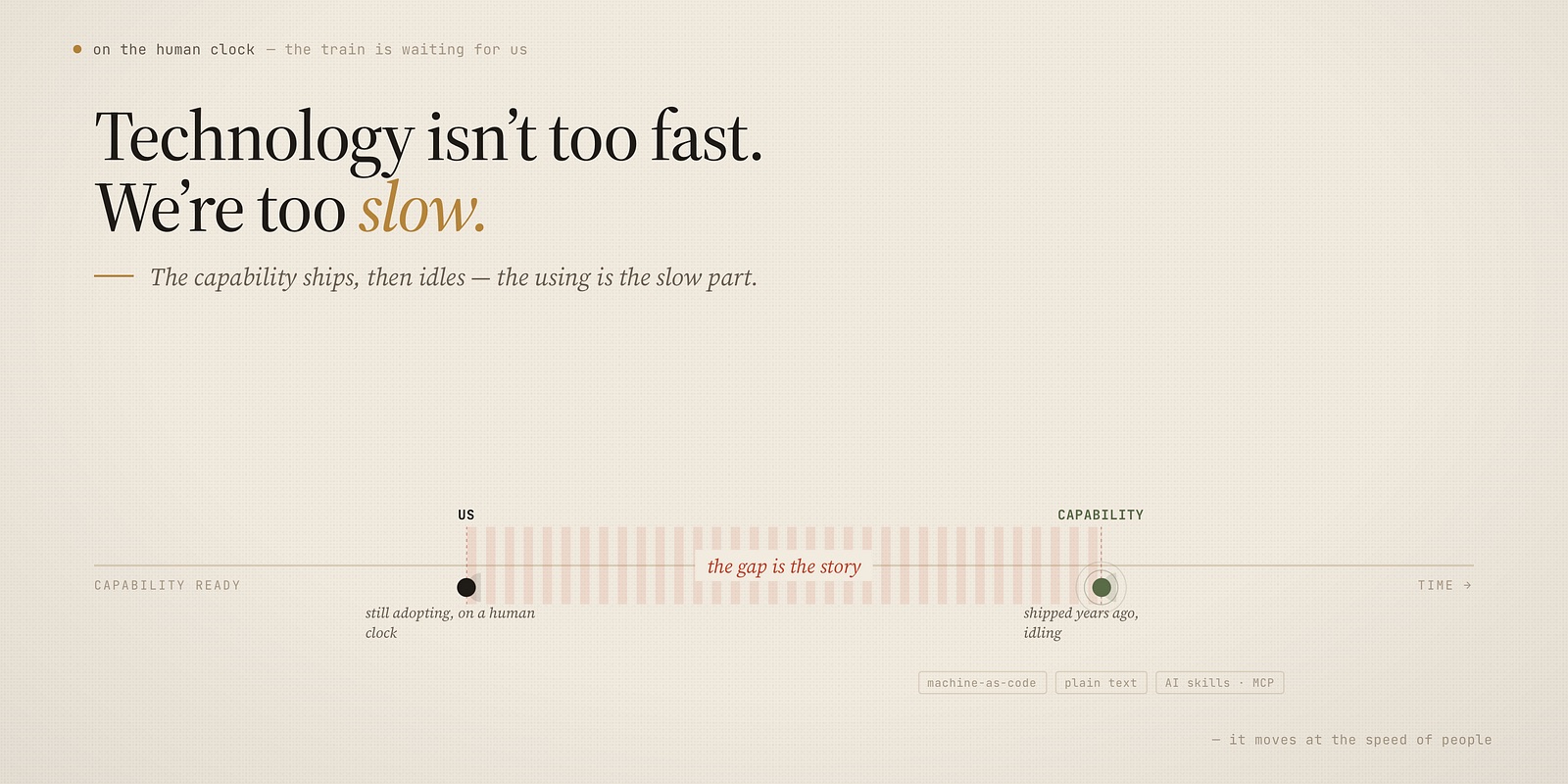
We talk about technology like it’s a runaway train — too fast, can’t keep up, leaving us behind. I’ve come to believe the opposite. The train is waiting for us. The slow part was never the machine. It’s us.
The capability almost always arrives before we do. The thing that’s actually ready ships, and then sits there, mostly unused, while people slowly — very slowly — change their habits enough to touch it. Technology doesn’t outrun us. It idles at our pace, because it has no choice.
I’m the proof, and so are you
I love this stuff, and I’m still slow. It took me about a year to move from Vim keybindings to plain Emacs ones — not because it was hard, but because habits don’t turn on command. I spent years inching my journal out of an app and into plain text, my tasks out of OmniFocus and into Org. None of those moves were technically difficult. They were humanly difficult, which is a different and much slower thing.
If someone who rebuilds his whole setup for fun moves this slowly, look around. The tools to work better have existed for years. The reason most people don’t use them isn’t availability. It’s that changing a habit costs more than learning a feature, and we are all, every one of us, on a human clock.
My dotfiles say it out loud
Here’s the clearest example I own. My machine is defined as code — Nix with Home Manager, my dotfiles managed with chezmoi. I can wipe this laptop and bring back the entire environment — packages, configs, keybindings, the lot — reproducibly, in one run. The technology to never hand-configure a machine again has been mature and free for years.
And yet the default, even among developers, is still to install things by hand, lose the setup when the laptop dies, and rebuild from memory next time. Not because declarative config is hidden — it’s well documented and right there. Because adopting it means changing how you think about your machine, and that change moves at human speed, not download speed.
The technology adapted a long time ago. People didn’t. That gap is the story.
AI is the same story, just louder
Nowhere is this clearer than AI right now. The models can already do far more than almost anyone asks of them. Capability jumps every few months — and most people are still using a spaceship to send a postcard: “summarize this,” “fix my grammar,” and not much else.
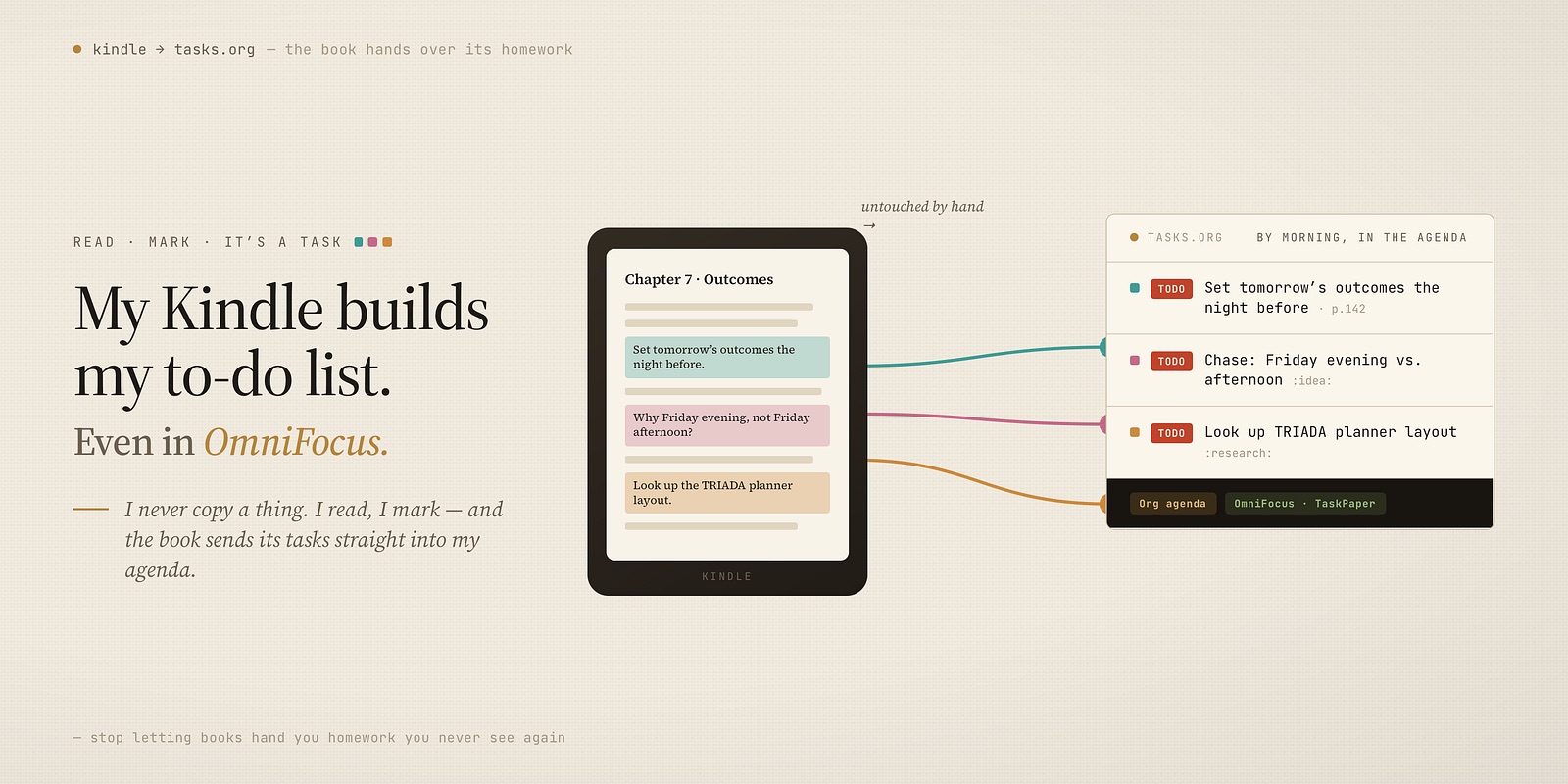
Meanwhile the real leverage is sitting right there. I’ve wired small skills that turn my Kindle highlights into structured notes on their own. I’ve connected services directly through MCP so an assistant can read my data where it already lives, no exports. None of that is exotic — it’s available to anyone today.
The bottleneck on AI’s impact isn’t the model. It’s how slowly we change what we do with it — our habits, our trust, our imagination about what to even ask. The intelligence is ahead of us. The using is behind.
Why technology can’t just go faster
This is the part that flips it around: even when the tech is ready, it usually can’t ship at full speed, because we couldn’t absorb it if it did.
So it gets throttled to us on purpose. Powerful features arrive wrapped in familiar buttons. Capability gets hidden behind a friendly chat box so it doesn’t frighten anyone. The history of technology is littered with products that were simply too early — right idea, arrived before people were ready, died waiting. Adoption, trust, habit, regulation, plain muscle memory — all of it runs at human speed. So the machine slows down and matches our stride, because the alternative is being ignored.
Technology doesn’t move at the speed of light. It moves at the speed of people.
So what do you actually do with that
Not despair — the opposite. If we’re the bottleneck, then the rare, real edge isn’t owning the newest tool. Everyone can buy that. The edge is being a little less slow than your own past self at actually adopting and using what’s already in your hands.
You don’t have to be early to everything. You just have to close the gap on yourself: pick the one tool or workflow you’ve been circling for a year and actually move on it. Be patient with everyone else, because they’re on the same human clock you are — but quietly stop waiting for technology to slow down for you. It already has. It’s been waiting this whole time.
Thanks for reading. Follow on X: https://x.com/maxclaxOS
Dotfiles: https://github.com/maxclax/dotfiles
Related: