 SUNCLAX

1/ Most Weeks Don’t Get Planned. They Just Happen to You.
How I actually run my life on three outcomes — Part 1 of 6.
Most weeks aren’t chosen
Here’s how most of my weeks used to start: they didn’t. I opened my laptop on Monday, the inbox was already full, and by the time I looked up it was Thursday and the week had spent me instead of the other way around. Busy the whole time. Aimed at nothing.
A week you don’t set is a week someone else sets for you — your inbox, your notifications, whoever emailed first. It will always feel full. It just won’t feel like yours.
The fix is smaller than any productivity system I ever tried, and it happens before the week starts.
Two minutes, and a trick with the tense
Sit down Monday morning — two minutes, that’s the whole cost — and imagine it’s already Friday evening. The week is done. What three things, if they’d happened, would make you say “good week”?
Write them as if they already have. Present perfect, not a to-do list:
- I have shipped the thing I kept postponing.
- I have spent three real evenings with my family, phone away.
- I have moved my body four times — I feel it.
Those three are your week. Not fifteen tasks — three outcomes. The difference matters: a goal is a box to tick, an outcome is the kind of week you actually wanted to live. Everything else that lands is noise competing with those three.
Before you lock them in, check what you’ve been starving
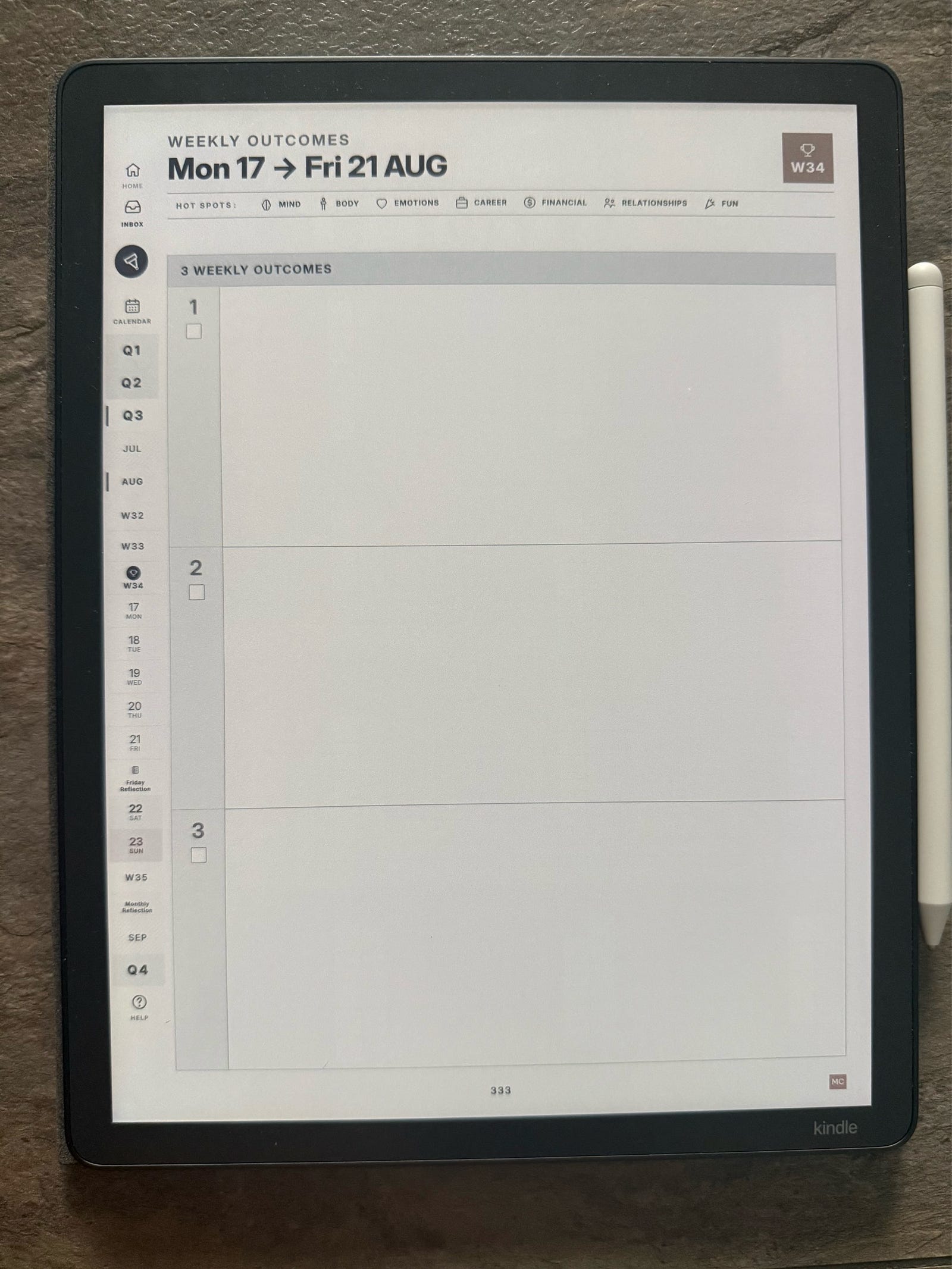
One extra look, and it’s the part that keeps this honest. Before you commit to your three, glance across the areas of a life — mind, body, emotions, career, money, relationships, fun — and ask which one you’ve been quietly neglecting. Then let that answer shape at least one of your three.
A week that’s all career and no body isn’t a good week. It only looks like one from inside the work. This is the step that stops “productive” from quietly eating everything else.
Then the week hands its shape to the day
This is the whole point of setting the week: it gives the day something to aim at.
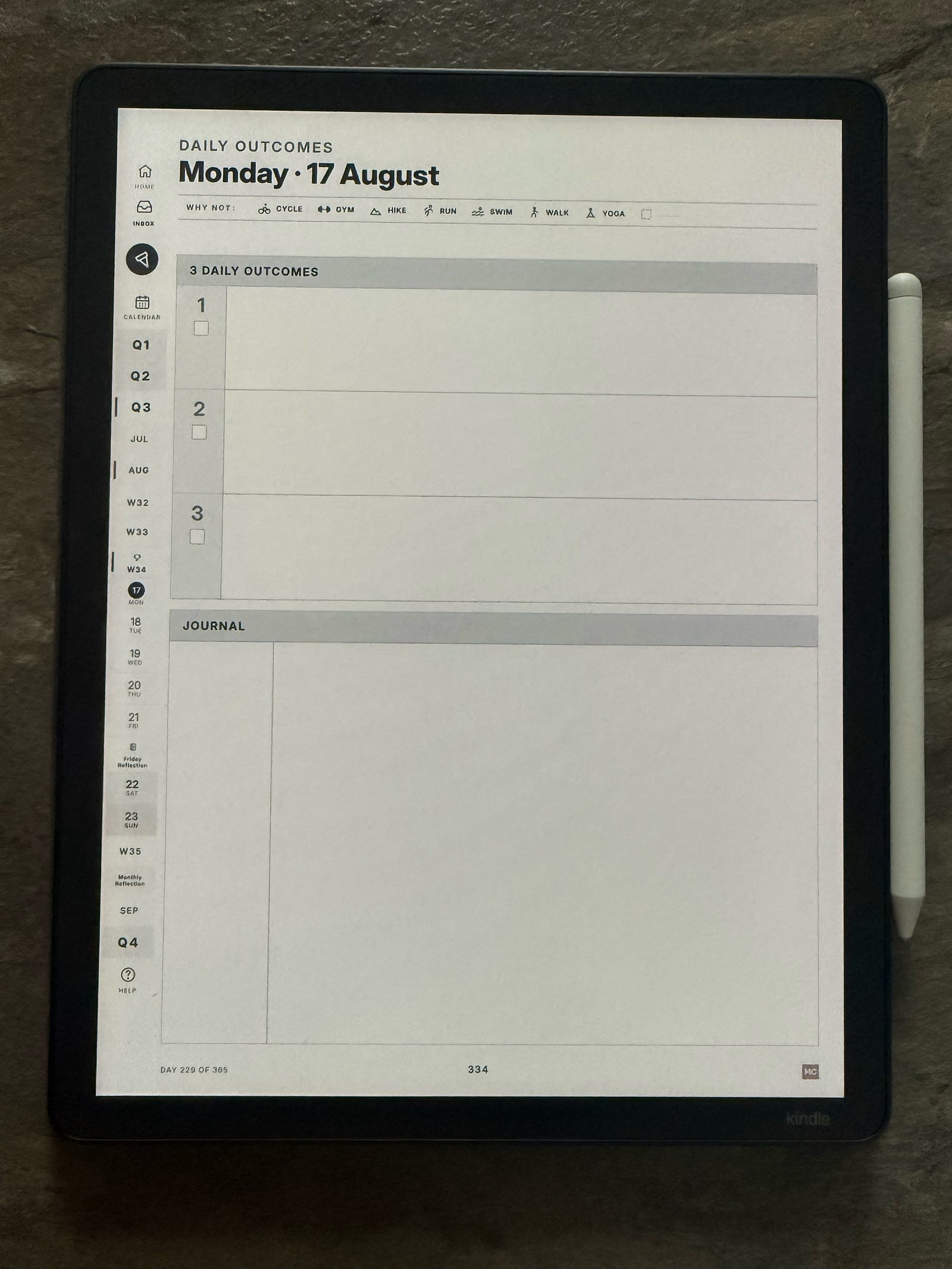
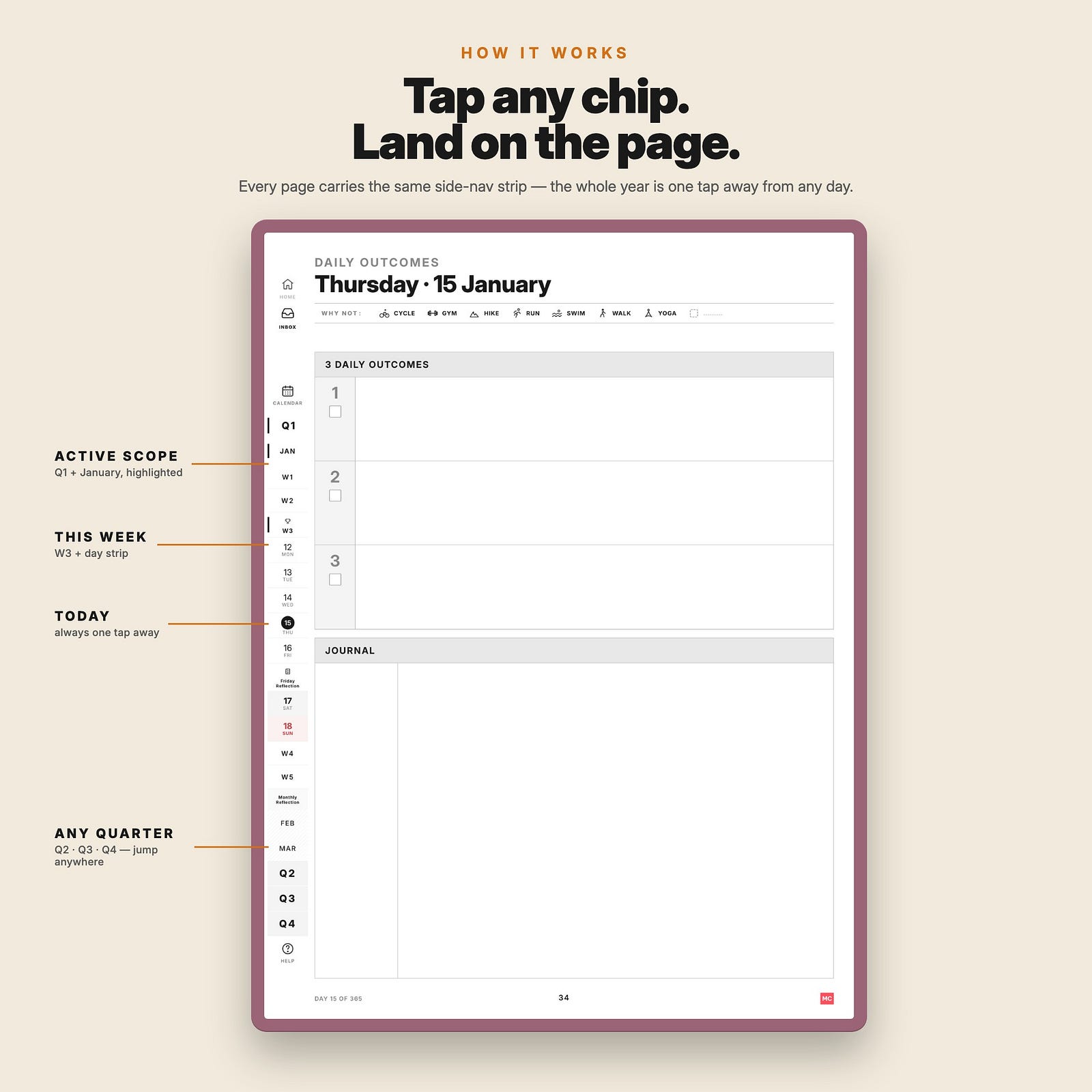
So do the same move again, smaller frame. Picture this evening, the day winding down — what three things, done today, would make it a good day and carry you toward that week? Those are today’s three. Just three, not a list of twenty. At least one of them should point straight at a weekly outcome, so the day is spending itself on the week instead of on whoever shouted loudest.
Day serves week. That’s the entire mechanism, and it starts with two minutes on Monday.
How the planner holds it
I do this in Triada, the planner I built after a decade of running these systems by hand. The seven life areas aren’t a separate ritual — they’re a row printed across the top of every Weekly Outcomes page, so the balance check is built right into setting the week. And each day sits one tap under its week, so “what was I aiming at?” is never a guess.
You don’t need the planner to do any of this — paper works, a note app works. The planner just removes the scramble, so the two minutes stay two minutes.
This week
Monday, before the inbox: three outcomes for the week, one serving the area you’ve been starving. Then three for today, one pointed at the week. That’s it. You’ve set the week before it could set you.
Next in the series: the day is where the week gets attacked — how to tell a busy day from a good one, and protect your three.
Thanks for reading. Follow on X: https://x.com/maxclaxOS
- Free sample (Monday-start): triada-sample.pdf
- Free sample (Sunday-start, US/Canada): triada-sample-sunday.pdf
- See the full edition + device variants: https://maxclax.com/triada
The series — How I run my life on three outcomes:
- Most Weeks Don’t Get Planned. They Just Happen to You. (you’re here)
- A Busy Day and a Good Day Are Not the Same Thing
- Without These Ten Minutes on Friday, Every Week Starts From Zero
- Close the Month Before You Start the Next One
- The Year Has a Lie Built Into It: There’s Always Next Year
- A Quarter Just Ended — Which Means You Just Finished a Year