 SUNCLAX

I Carried a Moleskine for Years. Then I Switched to Plain Text.
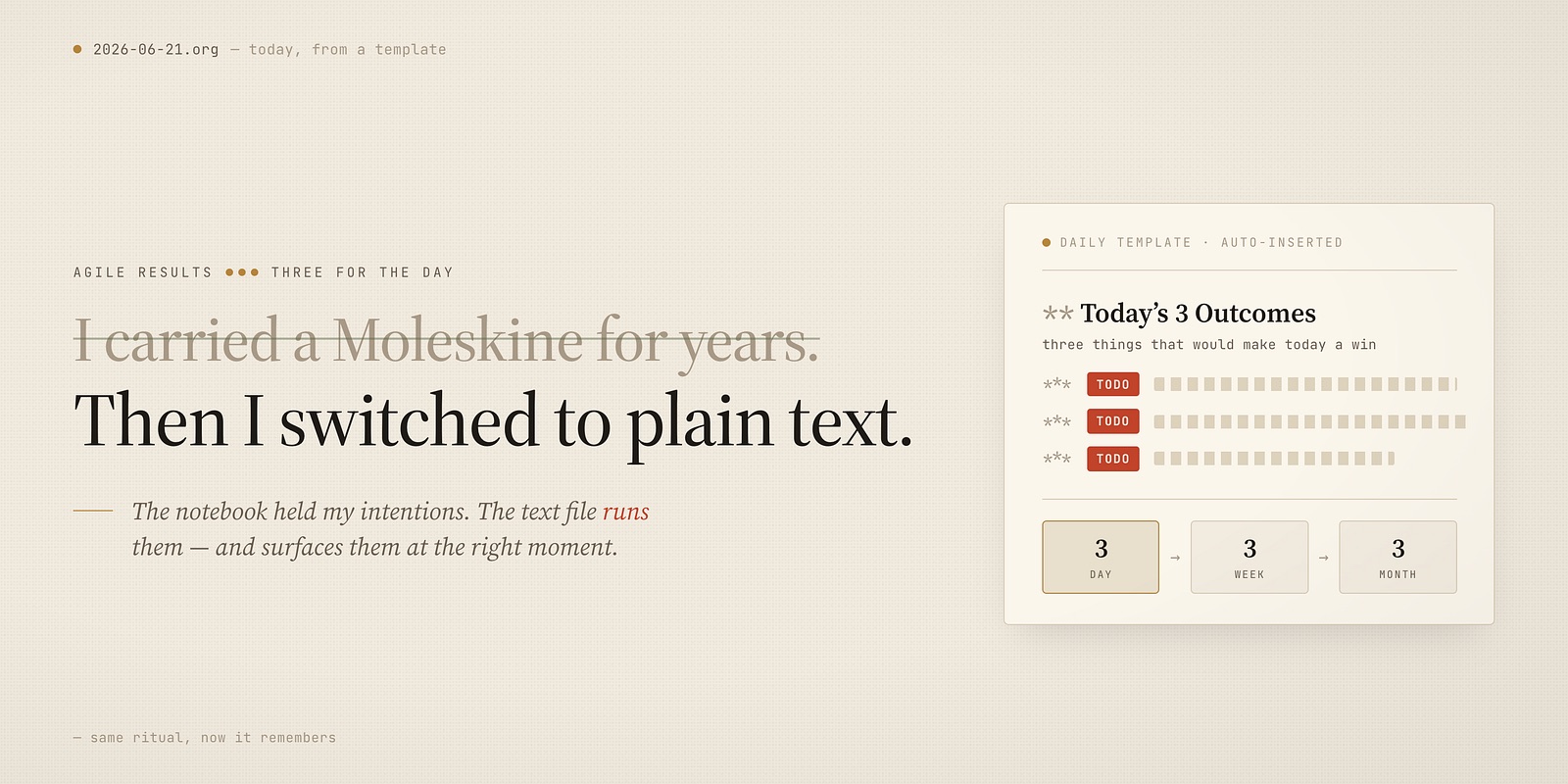
For years my routine lived in a Moleskine. Every morning, three things I wanted to get done. Every Friday, a short reflection. Every month, the outcomes I was aiming for. I loved that notebook — the paper, the ritual, the weight of it in my bag.
But a paper notebook has a quiet flaw: it can’t remind you of anything. It only holds what you write; it never hands it back at the right moment. My Friday reflection was brilliant on Friday and invisible by Tuesday. Last month’s outcomes were three pages back and out of sight. The structure was good. The notebook just couldn’t run it.
So I moved the whole routine into plain text with Org-mode — same structure, same ritual, but now it surfaces itself. The templates below are exactly what I use, and I think the system is good enough that most people should at least try it.
The method first (it’s not about Emacs)
Before any tool: the routine itself is simple, and it’s the part that matters.
It’s three rhythms:
- Daily: pick 3 outcomes for today. Not a 20-item to-do list — three things that would make today a win.
- Weekly (Friday): a short reflection — what went well, what to improve, and 3 outcomes for next week.
- Monthly: 3 outcomes for the month, so the daily threes ladder up to something.
Three for the day, three for the week, three for the month. You can run this in any notebook on earth. I ran it on paper for years. Org-mode just made it remember things for me.
The daily template
Every new day’s journal is created from one template. This is it, verbatim:
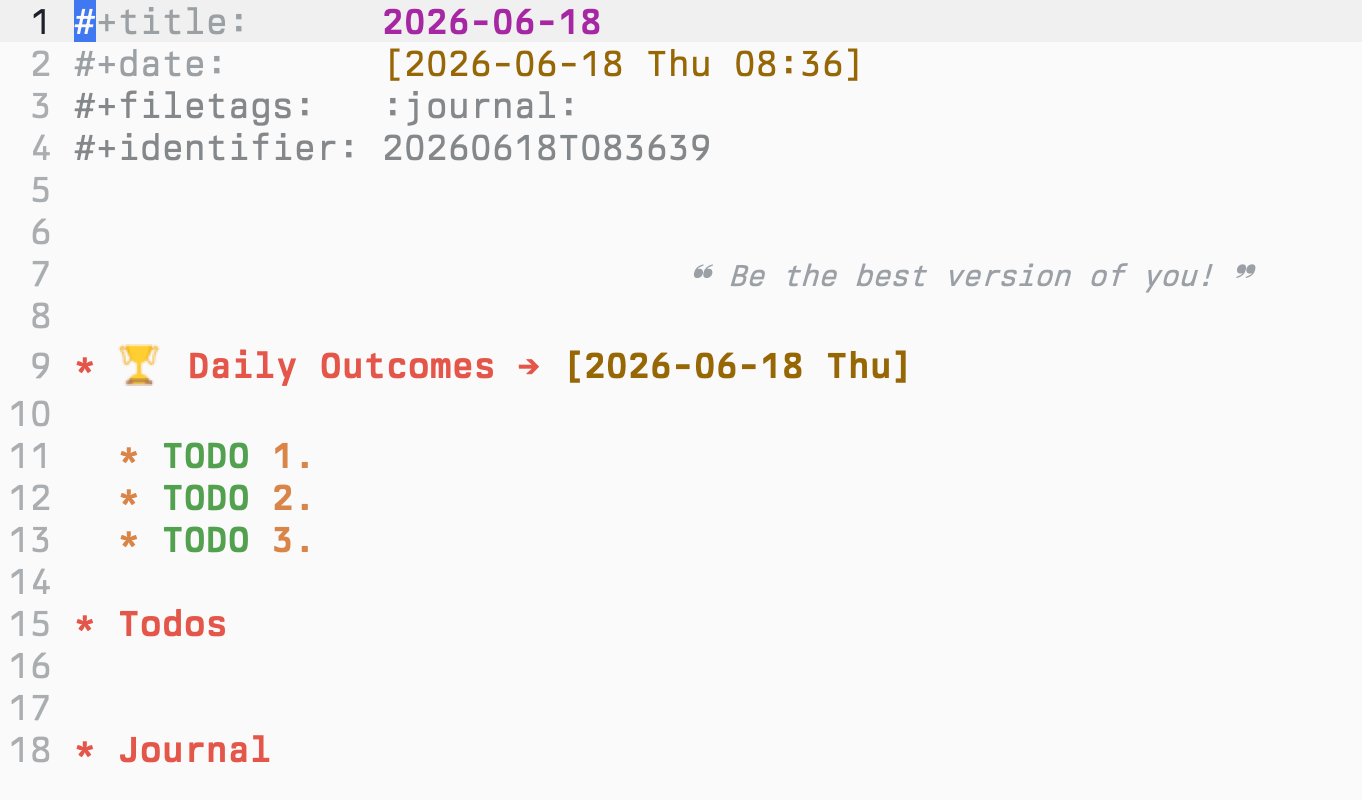
Three outcomes as real TODOs (so they show up in my agenda alongside everything else), a Todos area for the smaller stuff, and a Journal section for the day’s notes. It drops in automatically when I open today’s entry — I just fill the three blanks. (There’s even a random quote that lands at the top of each new entry, but that’s another story.)
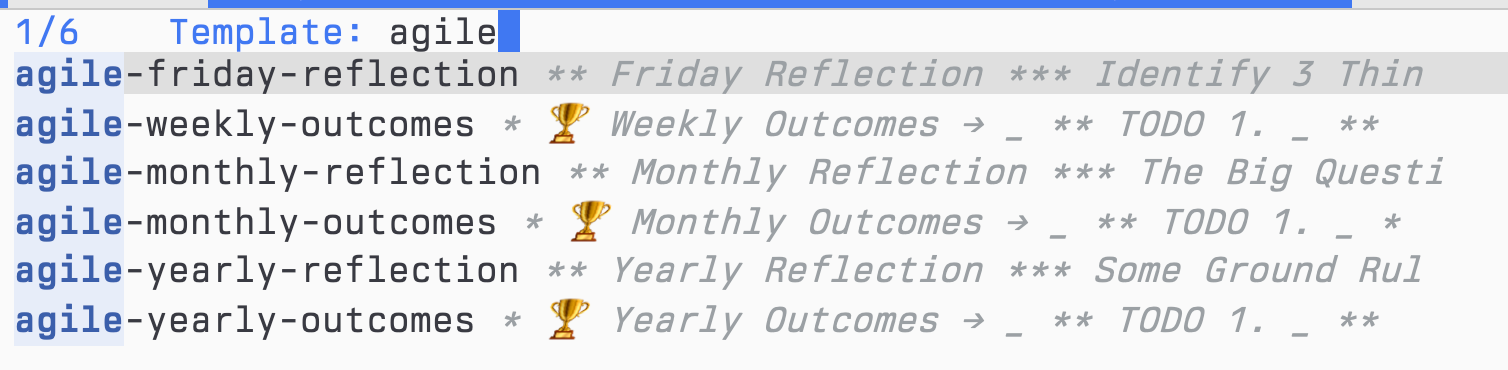
The Friday reflection
Friday gets its own template — the weekly checkpoint that paper could never resurface on its own:
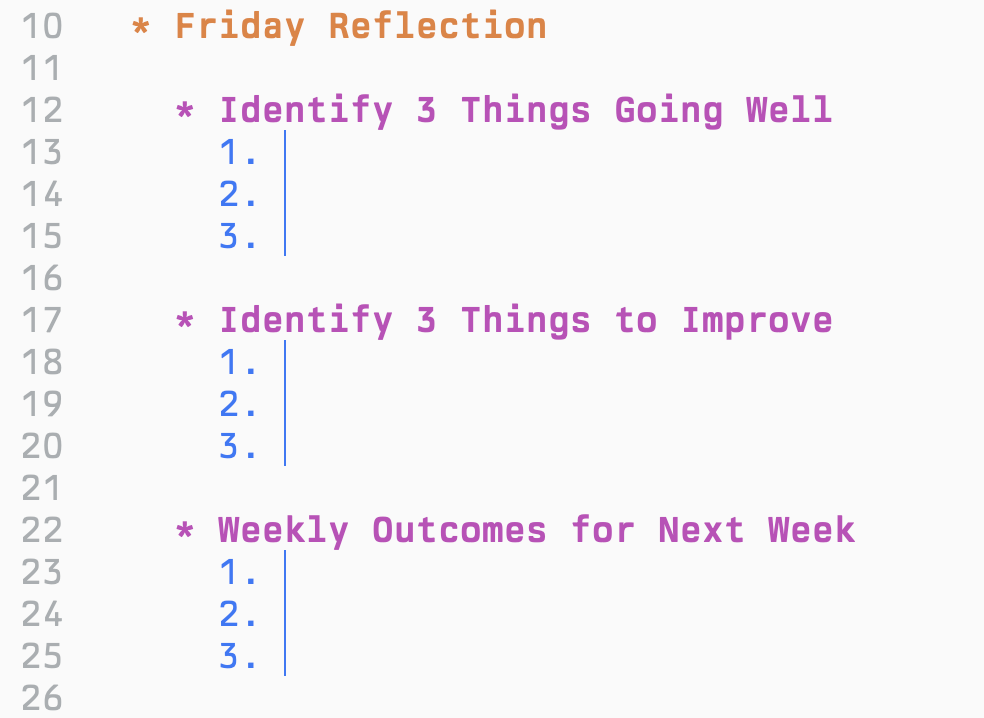
Three things going well, three to improve, three outcomes for next week. Ten minutes, same prompts every Friday. The difference from the notebook: next week’s three outcomes are now in the system, where they’ll show up next to my daily threes — not stranded on a page I won’t turn back to.
The monthly outcomes
And the month, which the template even dates to the last day of the month for me:
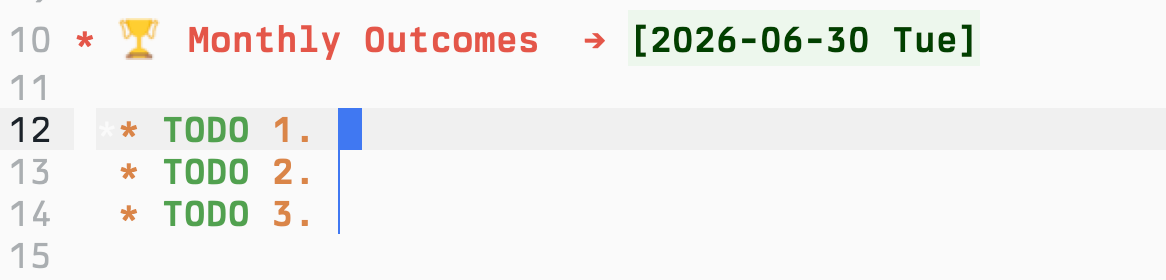
Three outcomes for the month, as TODOs with the month-end as their horizon. This is the layer that keeps the daily threes honest — when I pick today’s outcomes, the month’s outcomes are right there in the agenda reminding me what they’re supposed to add up to.
Why it works where paper didn’t
The structure is identical to my old Moleskine. What changed is that the text now acts:
- The three daily outcomes are TODOs, so they live in my agenda, not just on a page.
- Friday’s “next week” outcomes and the month’s outcomes surface alongside the day — the long view sits next to the short one, automatically.
- Nothing falls behind the current page. There is no current page. It’s all one searchable, dated stream I own.
- It’s plain text: private, free, and it’ll still open in thirty years, long after this year’s productivity app is gone.
The notebook held my intentions. The text file runs them.
You don’t need Emacs to start
Here’s the honest part: the method is the valuable thing, and you can start it today, anywhere — a paper notebook, a notes app, whatever. Three for the day, three for the week, three for the month. If that’s all you take from this, it’s enough.
If you want it to remember for you the way mine does, Org-mode is worth the climb, and I’ve written about getting in gently — how I moved from OmniFocus to a text file and how I count milestones in plain text.
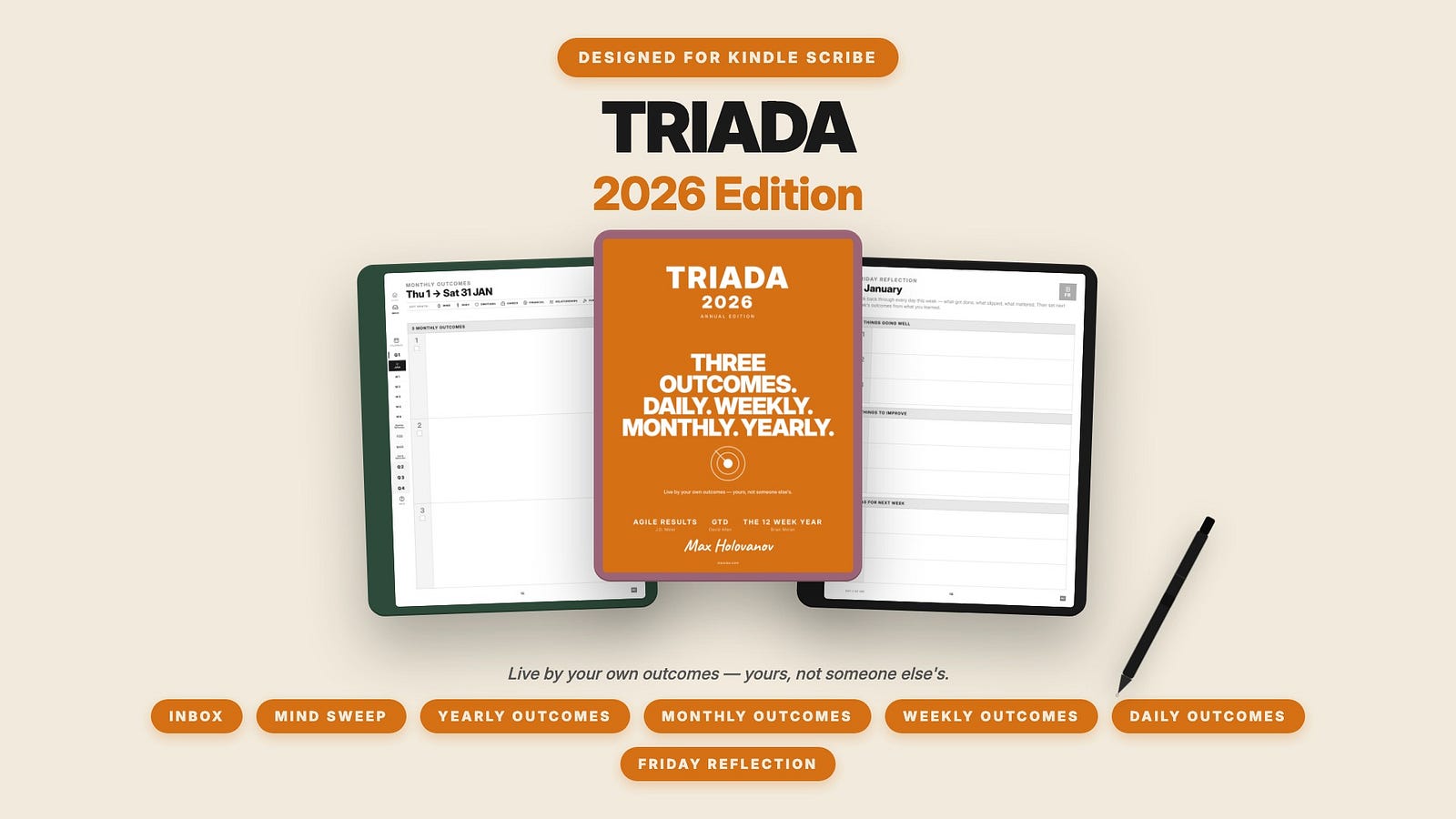
And if you live on a Kindle Scribe or another tablet instead of in Emacs — I built this exact daily/weekly/monthly system as a hyperlinked planner so you can run the same routine by hand, no Emacs required: the planner I built after seven others failed. Same three rhythms, on the device you actually carry.
Paper got me started. Plain text made it stick. The method is yours either way.
Thanks for reading. Follow on X: https://x.com/maxclaxOS
Dotfiles: https://github.com/maxclax/dotfiles
Run your outcomes on a Kindle instead? My planner: https://maxclax.com/triada
Related: